Case study · AP-HM, Marseille University Hospital
The first public hospital department in France to deploy Listen Leon. In ten months, 54 collective thank-you messages, written by families and by the care team itself. One poster, one QR code, and the words arrive.
July 2025 → April 2026
54
collective thank-you messages approved and delivered to the teams.
153
healthcare professionals from the unit registered on the platform.
9%
of families wrote a message, with no reminders and no obligation.
249
characters per message on average. Some are full letters.
Listen Leon platform data, July 2025 to April 2026.
The context
A neonatal intensive care unit welcomes families at the worst moment of their lives. Staff support tragic situations, day and night.
Parents want to say thank you. Sometimes they leave a box of chocolates on a counter, sometimes a handwritten card that gets lost, and very often nothing at all, because discharge day is a blur.
Meanwhile, care teams almost never hear about what they did well. What travels back to them are incidents and complaints. That is the mechanism we describe in our guide on the lack of recognition.
The rollout
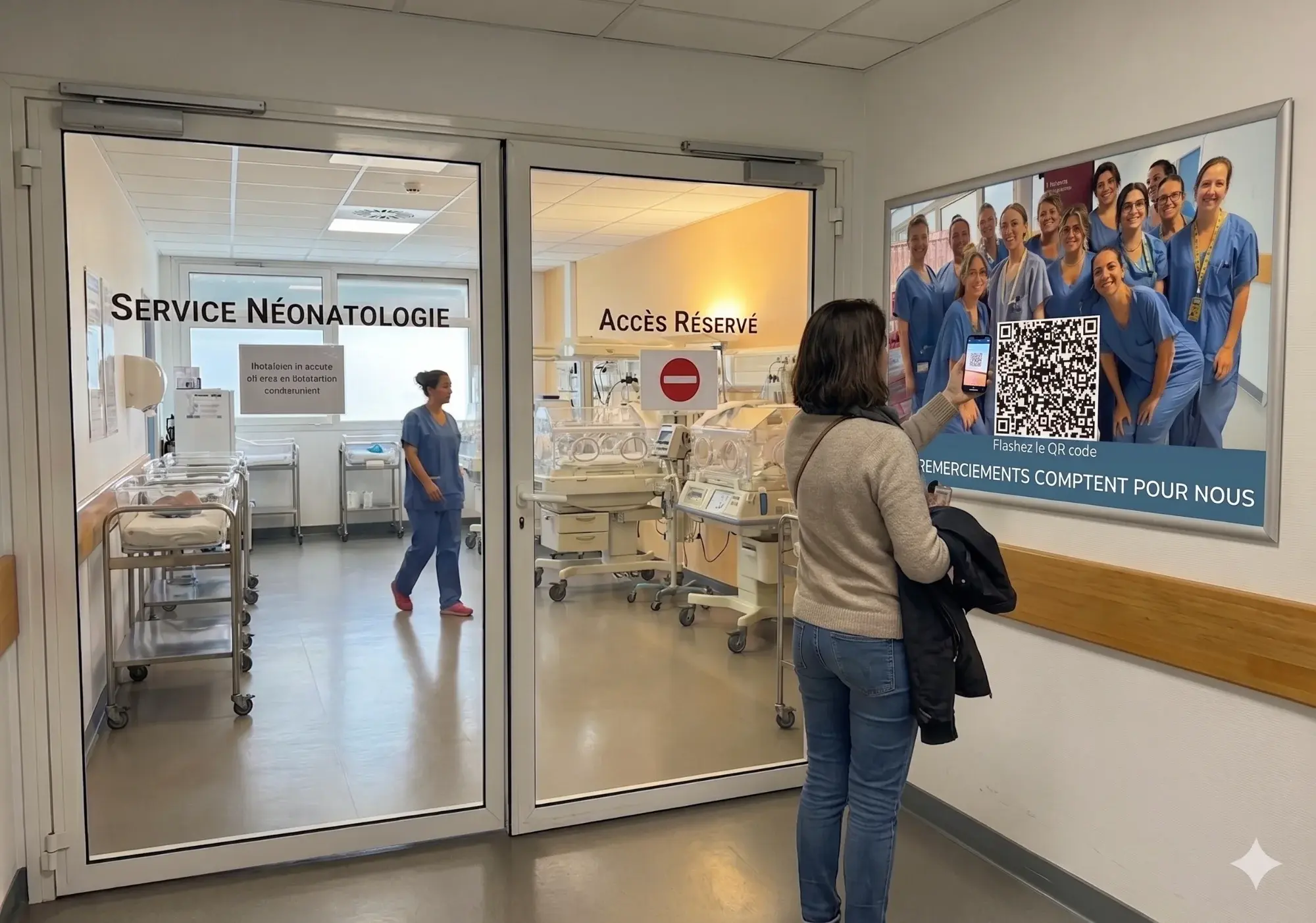
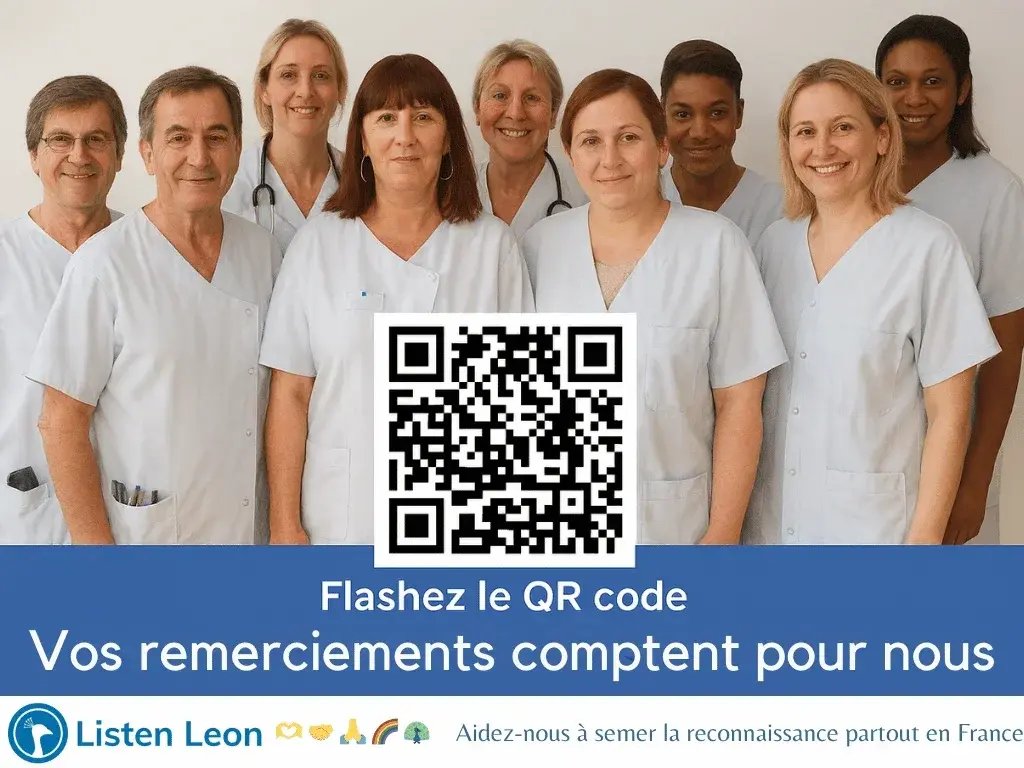
The communication kit shows real photos of the unit's own teams, not stock imagery. That is what makes people act.
Culture before technology. Our recognition training explains why recognition matters and how to express it well.
Parents scan with their own phone and write within minutes, whenever they feel ready. Written or voice message.
Every message is reviewed before it reaches the team. Staff then react with an emoji, which closes the loop with the family.
360° recognition
Families, relatives and staff all use the same platform. That is the definition of 360° recognition, and no other tool on the market allows it.
48
messages from families and relatives
6
messages between colleagues
54
approved collective messages
Neonatal intensive care accounts for 37% of the messages, the most emotionally intense. But the fact that the cleaning team is named explicitly shows that families see the hospital as one whole. This is systemic recognition, not just medical recognition.
What the families wrote
“ To the whole neonatal intensive care team, thank you. Thank you for those three weeks with our son. Three suspended, exhausting weeks, carried by your presence. In a place where everything is fragile, you were far more than carers. You were landmarks, reassuring voices, attentive hands, deeply human hearts. ”
The parents of a newbornJanuary 2026
“ With all my heart I want to thank you for every second you gave me and my parents. My mum went through some harder days than others, but you knew how to reassure her with the right words and the right gestures. Today is my discharge day. ”
A baby and their parentsFebruary 2026
“ Beyond the technical and the professional, every one of you is a beautiful soul, a remarkably human person. You are our guardian angels. ”
The father of a newbornAugust 2025
“ Thank you for your kindness through the nights we spend together, the eventful ones and the quiet ones. To me you are far more than a work team. ”
A team member, peer-to-peer messageAugust 2025
Authentic messages left on the platform, anonymised for this page and translated from French.
The head of department's view
Prof. Tosello confirms the point most hospital directors worry about: the platform does not replace the letters and gifts families already leave. It adds a channel, it removes none.
Medical leadership buy-in is the condition for any successful hospital rollout. Here it is secured, and on camera.
Prof. ToselloNeonatal intensive care, AP-HM Hôpital Nord, Marseille · interview in French
Message analysis
Medical terms are almost absent. The dominant vocabulary is human: humanity, gentleness, heart, kindness. Parents do not thank the team for the care, but for the way it was given.
Families talk about guardian angels, a second family, a cocoon. In neonatal care, that sense of emotional safety is vital for vulnerable parents.
Families use first names. Recognition moves from the collective to the individual, the most powerful form according to research on recognition at work.
Several messages salute the night team, the availability at 3 a.m., the eventful nights. Families recognise what usually nobody sees.
The strengths recognised
The strengths most often named by families and colleagues across the 54 messages.
What the research says
The messages cover all four dimensions of recognition described by Jean-Pierre Brun and Ninon Dugas: the existential dimension, when a nurse is named by their first name, the work practice dimension, in the gentleness of the gestures, commitment, in the night team and the constant presence, and results, in going home.
Families who have never read a research paper spontaneously express a model that science took years to formalise. We break that model down in our guide to the science of recognition.
The Listen Leon difference
Most recognition tools stay locked inside the organisation: colleagues thanking colleagues, sometimes a manager.
Listen Leon lets a patient, a parent, a resident or a family thank the people who care for them. In a hospital, that difference is not technical. It changes the very nature of the messages teams receive.
Ten months after launch, the flow has never stopped. This was not a novelty effect.
We install the programme within weeks, posters and training included. Thirty minutes is enough to see whether it makes sense for you.
Book 30 minutes